

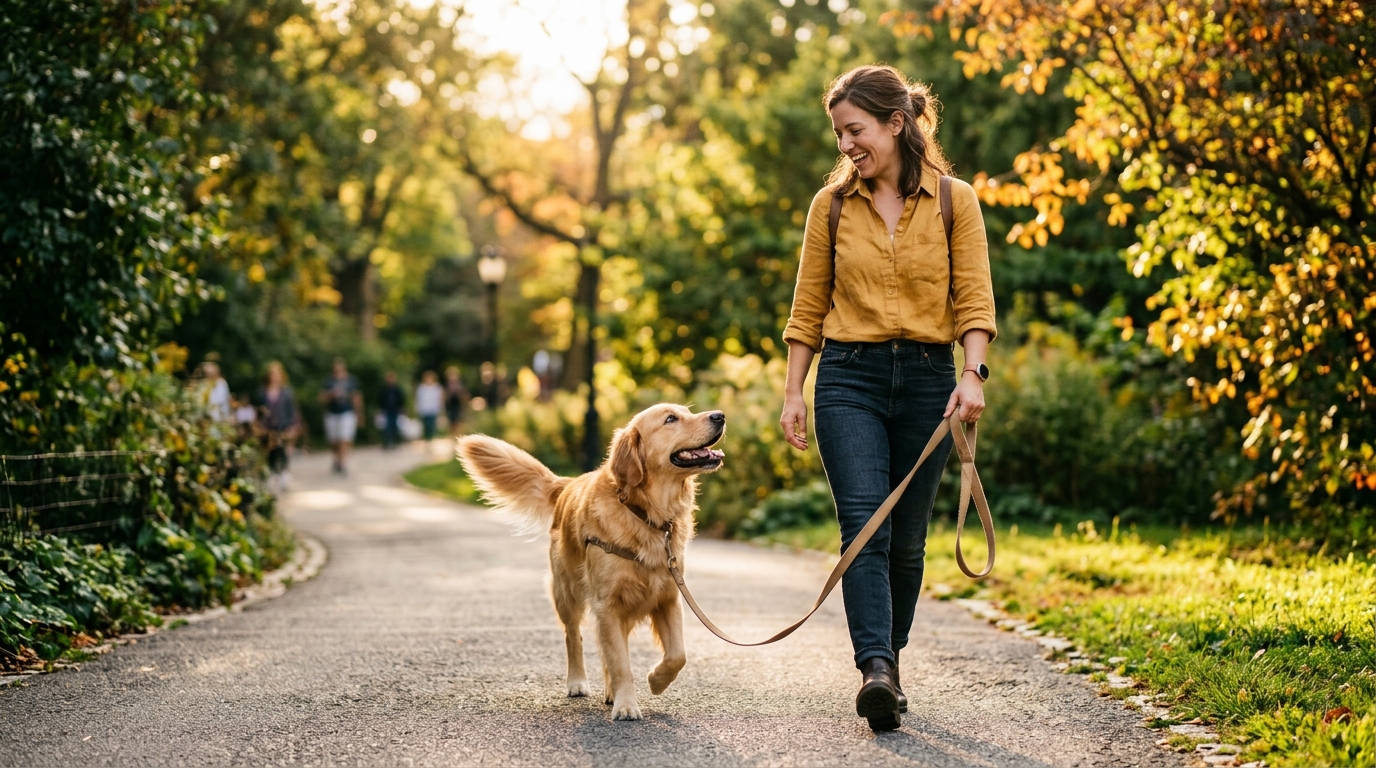
Does walking your dog feel more like a tug-of-war match than a relaxing stroll? You're not alone. Leash pulling is one of the most common behavioral complaints among dog parents. Fortunately, with patience and positive reinforcement, you can teach your dog the joys of loose-leash walking.
Why Do Dogs Pull?
Dogs don't pull to be dominant or stubborn. They pull for a few simple reasons:
- Pace: A dog's natural walking pace is much faster than a human's.
- Excitement: The outside world is full of amazing smells, sights, and sounds. They just want to get to them quickly!
- It Works: In the past, when they pulled, you likely moved forward. They learned that pulling gets them where they want to go.
The Foundation of Loose-Leash Walking
The goal of loose-leash walking isn't to force your dog into a strict "heel" position the entire time. Instead, it's teaching them that the leash should always have a "J" shape (slack) in it, and tension means the walk stops.
Step-by-Step Training Guide
- Start in a Low-Distraction Environment: Begin training inside your house or in a quiet backyard before venturing out to the busy street.
- The "Be a Tree" Method: The moment the leash gets tight, stop walking immediately. Stand completely still like a tree. Do not pull back; just anchor yourself.
- Wait for Slack: Wait for your dog to relieve the tension. They might take a step back, look at you, or simply loosen the leash. The second the leash has slack, mark the behavior (say "Yes!" or click) and offer a treat near your leg.
- Reward the Position: Continually reward your dog for walking by your side. If you feed them next to your knee, they will want to stay next to your knee.
- Change Directions: If your dog charges ahead, calmly turn around and walk the other way. When your dog catches up to you, reward them.
What to Avoid
- Retractable Leashes: These teach dogs that pulling actually *does* give them more freedom. Use a standard 6-foot flat leash instead.
- Aversive Tools: Choke chains, prong collars, and shock collars can cause pain and create negative associations with walks. Stick to a comfortable, well-fitting harness (front-clip harnesses are great for pullers).
Loose-Leash Walks in Busy Neighbourhoods
Busy roads, scooters, other dogs, and unfamiliar sounds can make a walk much harder than practice at home. Start at a quieter time or in a low-traffic lane, keep a comfortable distance from anything that worries or excites your dog, and reward check-ins with you. If the environment is overwhelming, calmly move away instead of asking for perfect walking in that moment.
Need Professional Help with Leash Pulling?
Our certified, force-free trainers can help you master the walk with personalized coaching.
Explore Training Programs